

Carports & Elevated Structures for Factories and Warehouses: A Buyer’s Guide
04/07/2026
GI vs Aluminium vs Hot-Dip Galvanized Solar Structures: Which Lasts Longer?
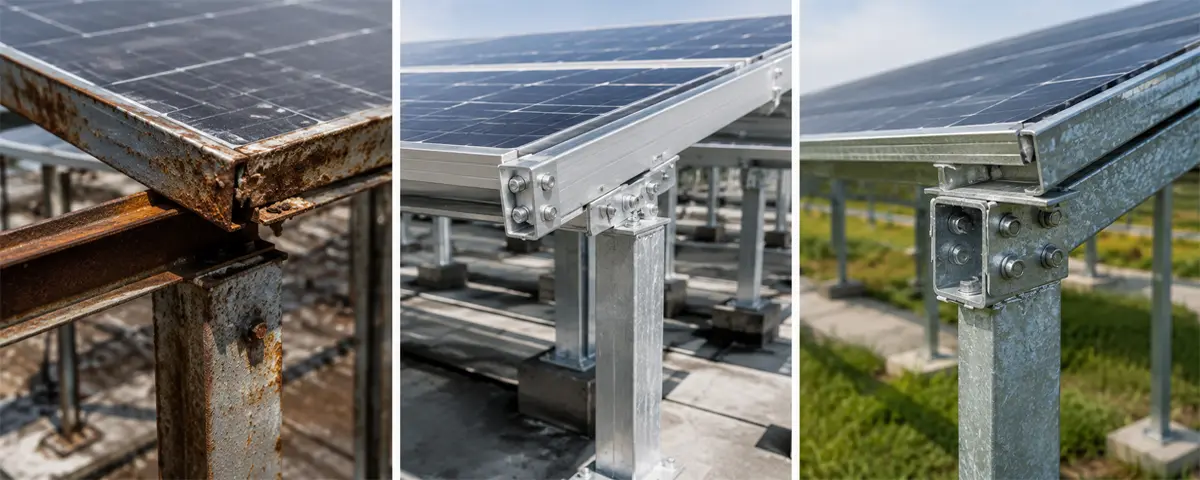
If you've ever stood in front of a solar EPC vendor trying to decide what your racking should be made of, you already know the feeling: everyone has a strong opinion, and most of them contradict each other. One supplier swears by aluminium. Another insists nothing beats hot-dip galvanized steel. A third tells you plain GI will save you money without sacrificing much.
The truth is, they're not entirely wrong — they're just answering different questions. The "best" material for a solar mounting system depends on your site conditions, budget, project lifespan, and how much maintenance you're willing to sign up for over the next 20-25 years.
This guide breaks down the three most common materials used in solar structures — Galvanized Iron (GI), Aluminium, and Hot-Dip Galvanized (HDG) steel — so you can make a decision based on engineering logic rather than sales pitches.
Why Material Choice Matters More Than People Think
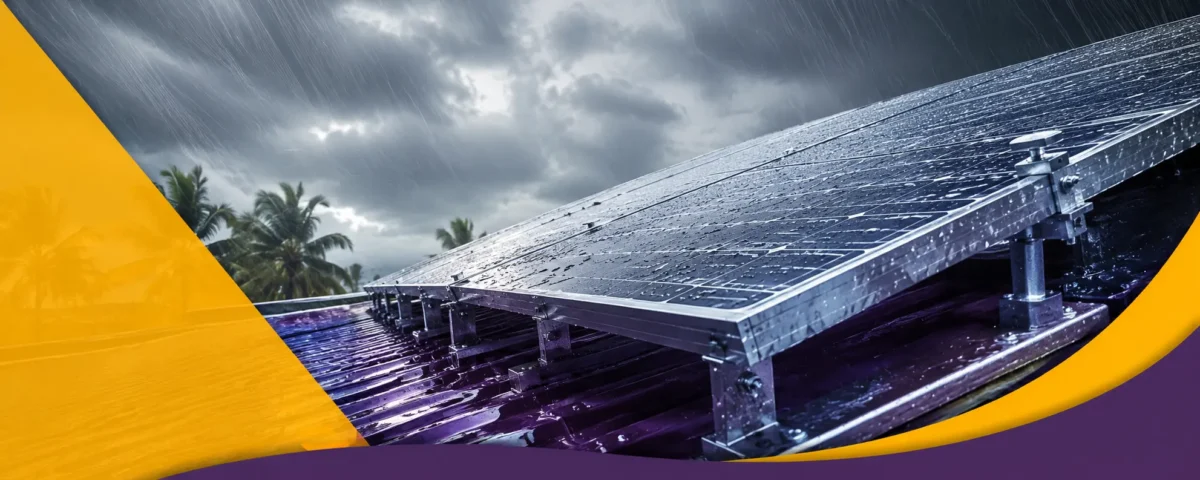
A solar panel is only as reliable as what's holding it up. Mounting structures aren't a background detail — they're the skeleton of your entire PV system. They have to survive decades of UV exposure, temperature swings, monsoon humidity, coastal salt spray, and wind loads, all while keeping panels perfectly aligned for maximum energy yield.
Get the material wrong, and you're not just risking a bit of rust. You're risking structural failure, panel misalignment, higher maintenance costs, and in worst cases, complete system downtime after a storm. Get it right, and your mounting system quietly does its job for 25+ years without anyone thinking about it again — which is exactly how good infrastructure should behave.
With that context, let's look at each material on its own merits.
GI (Galvanized Iron) Solar Structures
GI structures are steel components coated with a relatively thin layer of zinc, usually through an electro-galvanizing or basic dip process. It's been a go-to choice for years, especially in cost-sensitive projects.
Strengths:
- Lower upfront cost compared to aluminium and HDG steel
- Decent load-bearing capacity for ground-mount arrays
- Widely available and easy to fabricate
Weaknesses:
- Thinner zinc coating means corrosion resistance is limited, especially at cut edges and joints
- Performs poorly in humid, coastal, or industrial (chemically polluted) environments
- Typical lifespan tends to fall short of aluminium or HDG steel under harsh conditions
GI still has a place in the market, particularly for short-to-medium-term installations or budget-constrained projects in dry, inland climates. But if you're building something meant to last a quarter-century, GI is usually the compromise option rather than the ideal one.
Aluminium Solar Mounting Systems
Aluminium racking has become the darling of rooftop and commercial installations, and for good reason. It naturally forms a protective oxide layer that resists corrosion without needing an external coating, and it's remarkably light for its strength.
Strengths:
- Excellent natural corrosion resistance — doesn't rust the way steel does
- Lightweight, which reduces structural load on rooftops and shipping costs
- Ideal for coastal and high-humidity regions where salt corrosion is a real threat
- Faster, easier installation thanks to lower weight and pre-engineered profiles
Weaknesses:
- Higher material cost than GI and often comparable to or pricier than HDG steel
- Lower load-bearing capacity than steel, which can limit use in heavy-duty ground-mount or tracker applications
- More sensitive to price swings, since aluminium is a globally traded commodity
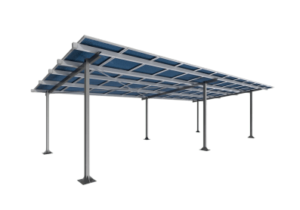
Aluminium mounting systems, particularly 6005-T5 alloy profiles, are now the preferred choice for residential and commercial rooftop solar, carports, and coastal installations where weight and corrosion resistance matter more than raw strength.
Hot-Dip Galvanized (HDG) Solar Structures
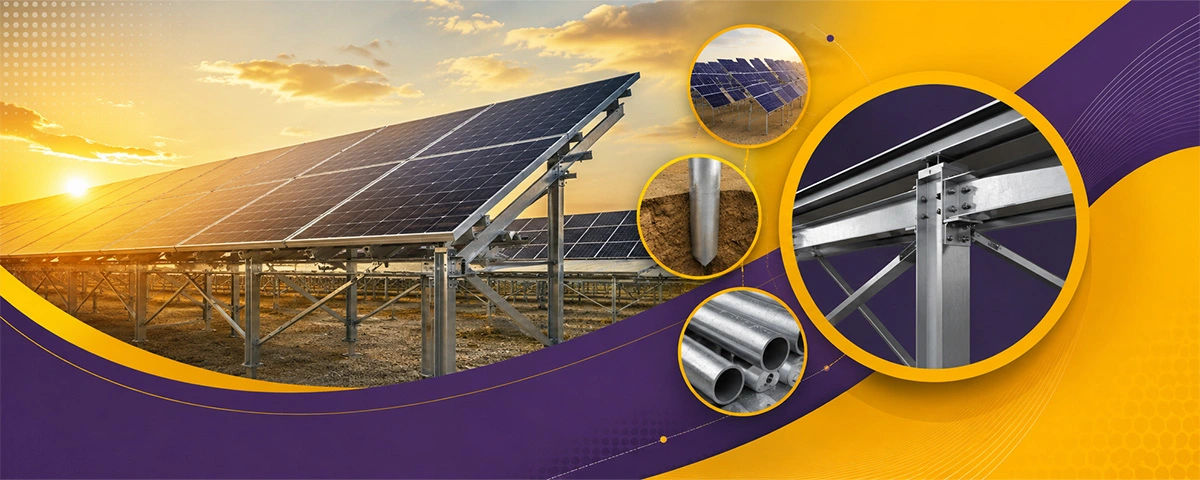
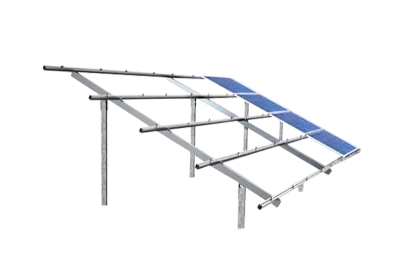
Hot-dip galvanization is a different process entirely from standard GI coating. Steel components are fully immersed in molten zinc, creating a thick, metallurgically bonded coating that covers every surface — including edges, welds, and hard-to-reach corners that thinner coatings often miss.
Strengths:
- Significantly thicker and more durable zinc coating than standard GI
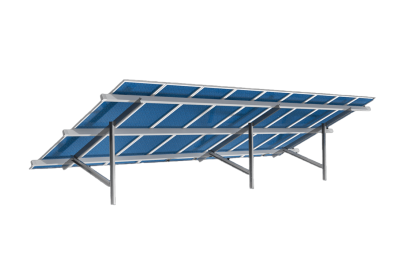
- Strong load-bearing capacity, making it ideal for large ground-mount and utility-scale projects
- Excellent value for money on big installations where tonnage and cost efficiency matter
- Well-suited to inland and moderate-humidity environments
Weaknesses:
- Heavier than aluminium, which increases transport and installation costs
- Cut edges and field modifications after galvanizing can create weak points unless properly treated
- In coastal or highly corrosive environments, it doesn't match the resilience of aluminium or newer coating technologies
For utility-scale solar farms, HDG remains the workhorse material. It strikes a practical balance between strength, cost, and durability, which is why it continues to dominate large ground-mount PV racking solutions worldwide.
Hot-Dip Galvanized (HDG) Solar Structures
| Factor | GI | Aluminium | Hot-Dip Galvanized |
|---|---|---|---|
| Corrosion resistance | Moderate | Excellent | Good to very good |
| Typical lifespan | 10-15 years (harsh climates) | 25-30+ years | 15-25 years |
| Weight | Heavy | Light | Heavy |
| Best environment | Dry, inland | Coastal, humid | Inland, utility-scale |
| Load-bearing capacity | Moderate | Lower | High |
| Relative cost | Lowest | Higher | Moderate |
In plain terms: aluminium generally lasts the longest in corrosive or coastal environments because of its natural oxide protection. HDG steel comes a close second and offers better structural strength for heavy-duty applications. GI, while budget-friendly, tends to show its age fastest, particularly wherever moisture and salt are part of daily life.
That said, "longest lasting" isn't always "best." A dry, inland utility-scale project may get 20+ solid years out of HDG steel at a fraction of aluminium's cost — meaning the smarter choice depends entirely on where and how the system will be used.
Market Trends Shaping Solar Mounting Systems in 2026
The solar racking industry isn't standing still, and a few clear patterns are emerging across GI, aluminium, and HDG steel segments.
The industry is moving beyond the old two-way debate. A newer contender — Zinc-Aluminium-Magnesium (ZAM) coated steel — is gaining serious traction, particularly for utility-scale projects. Independent testing suggests ZAM structures can outperform traditional hot-dip galvanized steel by 3-10x in corrosion resistance, especially at cut edges, with some structures maintaining integrity well beyond 25-30 years compared to 15-20 for standard HDG.
Material selection is becoming site-specific rather than one-size-fits-all. Manufacturers are increasingly tailoring recommendations: aluminium alloy systems for rooftops and coastal zones, ZAM-coated or HDG steel for large ground-mount farms, and hybrid approaches for desert regions where sand erosion demands abrasion resistance over pure corrosion protection.
Extreme weather engineering is now standard practice. With hurricane-prone regions mandating wind resistance up to roughly 160 mph and heavier snow-load requirements in colder climates, mounting structure specifications are getting more rigorous across all material types — not just for premium products.
Raw material costs remain the biggest swing factor. Steel and aluminium together typically account for 50-65% of total mounting structure cost, so global commodity price cycles, tariffs, and supply chain shifts directly affect which material makes financial sense for a given project at a given time.
Pre-assembly and modular design are cutting installation time. Across GI, aluminium, and galvanized steel alike, manufacturers are shipping more factory pre-assembled components, reducing on-site labor and speeding up deployment — a trend that matters just as much as the raw material itself when it comes to total project cost.
Future Outlook: Where PV Racking Solutions Are Headed
The solar mounting systems market is projected to keep growing steadily through the next decade, tracking the broader expansion of global solar PV capacity. A few developments worth watching:
- Advanced coatings will keep closing the gap between steel's cost advantage and aluminium's corrosion resistance, with ZAM and similar technologies pushing steel structures closer to 30-year lifespans.
- Utility-scale demand will keep favoring steel-based solutions (HDG and ZAM) because of their cost-per-ton efficiency at scale, while rooftop, carport, and coastal segments continue leaning toward aluminium.
- Regional manufacturing will diversify, with Southeast Asia, the Middle East, and India expanding local fabrication capacity to reduce reliance on imported steel and aluminium.
- Sustainability will factor more into material choice, with recycled steel and aluminium content becoming a selling point as developers face pressure to lower the embodied carbon of their projects.
- Bifacial panels and larger modules will push racking design toward stronger, more precisely engineered structures regardless of material, since heavier panels demand tighter tolerances everywhere.
For businesses and developers, this means material selection will increasingly be treated as an engineering decision backed by site data, not a default habit based on what's cheapest or most familiar.
Final Thoughts
A solar panel is only as reliable as what's holding it up. Mounting structures aren't a background detail — they're the skeleton of your entire PV system. They have to survive decades of UV exposure, temperature swings, monsoon humidity, coastal salt spray, and wind loads, all while keeping panels perfectly aligned for maximum energy yield.
Get the material wrong, and you're not just risking a bit of rust. You're risking structural failure, panel misalignment, higher maintenance costs, and in worst cases, complete system downtime after a storm. Get it right, and your mounting system quietly does its job for 25+ years without anyone thinking about it again — which is exactly how good infrastructure should behave.
With that context, let's look at each material on its own merits.