

GI vs Aluminium vs Hot-Dip Galvanized Solar Structures: Which Lasts Longer?
04/07/2026
5 Signs Your Solar Structure Is Poorly Engineered (And What It Costs You Later)
Solar energy is booming, and for good reason. It's clean, it's scalable, and it pays for itself over time. But here's something that doesn't get talked about enough: a solar installation is only as good as the structure holding it up.
You can have premium panels, top-tier inverters, and flawless wiring — but if the underlying solar mounting systems are poorly engineered, none of that matters. Sooner or later, the structure will let you down, and it usually happens at the worst possible time.
For developers, EPC contractors, and solar businesses, understanding the red flags of bad structural design isn't optional. It's the difference between a 25-year asset and a 5-year liability. Let's break down the five signs your solar structure might be poorly engineered, and what it actually costs you when things go wrong.
1. Inadequate Wind and Load Calculations
This is the big one. A shocking number of solar structure failures trace back to underestimated wind loads, snow loads, or seismic factors.
If your PV racking solution wasn't designed using site-specific data — wind speed zones, terrain category, panel tilt angle, and building height — it's essentially a guess dressed up as engineering.
Warning signs include:
- Generic, one-size-fits-all racking designs used across different geographic zones
- No stamped structural calculations from a licensed engineer
- Racking systems that "look similar" to a competitor's without being independently verified
The cost later: Panel uplift, bent rails, torn membranes on rooftops, and in extreme cases, entire arrays ripped apart during a storm. Insurance claims, downtime, and reputational damage follow close behind.
2. Thin or Substandard Materials
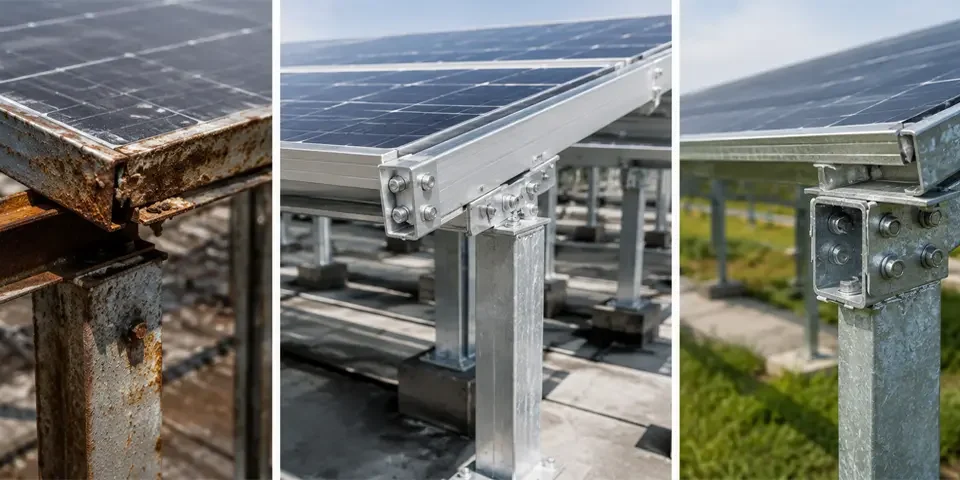
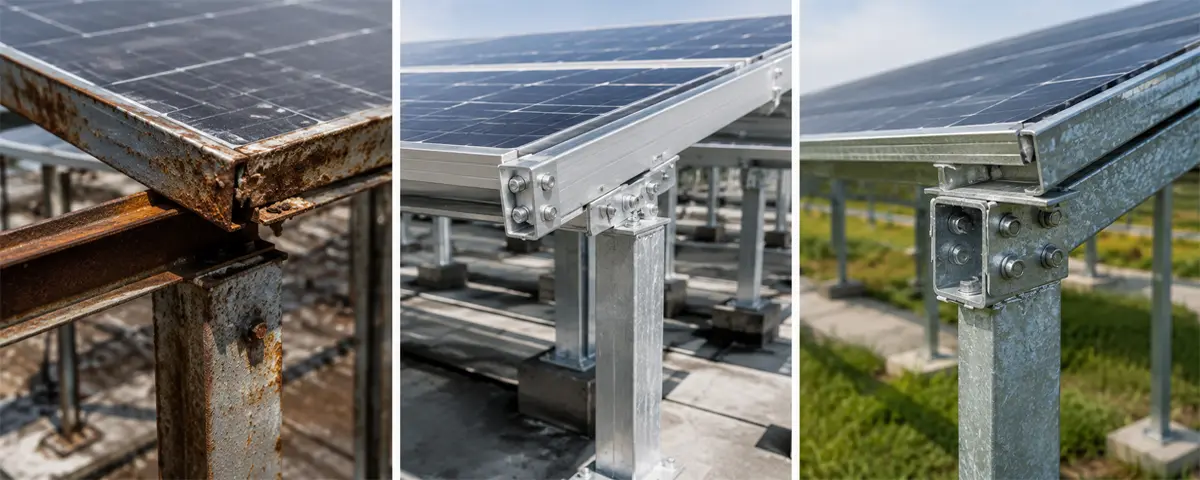
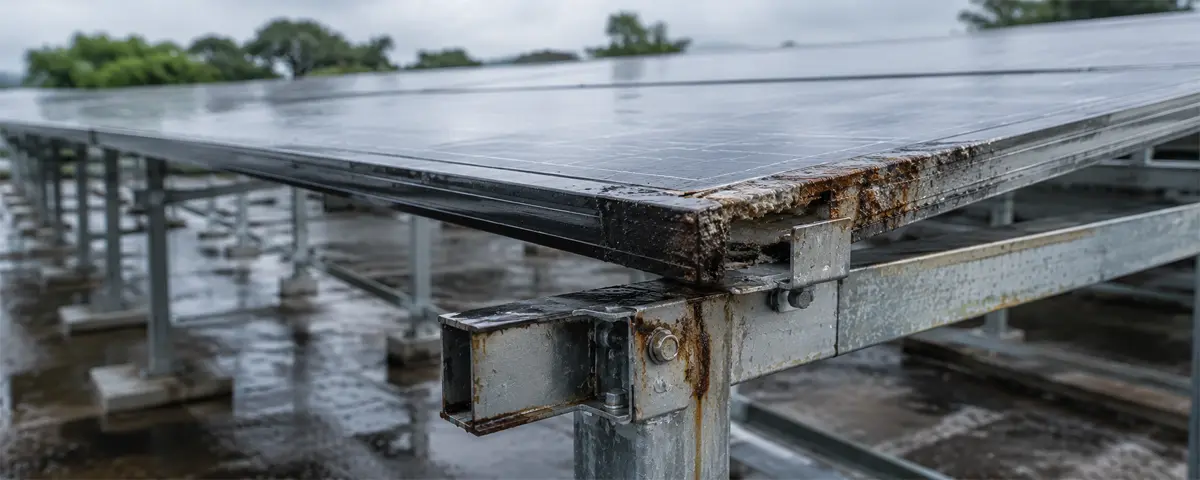
Poorly engineered structures often cut corners on material grade to save a few dollars per unit. Thinner aluminum extrusions, low-grade steel, or inconsistent galvanization might pass a quick visual inspection, but they won't survive two decades of thermal cycling, corrosion, and mechanical stress.
Look for:
- Racking components with no clear material certification (aluminum alloy grade, steel coating thickness, etc.)
- Visible rust or oxidation within the first year
- Connectors and clamps that flex or loosen under normal handling
The cost later: Structural fatigue, premature corrosion, and micro-cracks that weaken the entire array over time. Replacing corroded components mid-lifecycle is far more expensive than investing in durable materials upfront.
3. Poor Foundation and Anchoring Design
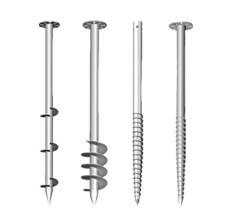
A solar mounting system is only as strong as what it's anchored to. Ground-mount systems need proper pile embedment depth based on soil testing. Rooftop systems need ballast or attachment points engineered for the specific roof type — not a generic bracket bolted wherever it fits.
Red flags:
- No geotechnical soil report for ground-mount projects
- Rooftop penetrations without proper flashing or waterproofing detail
- Ballast weights estimated rather than calculated
The cost later: Foundation shifting, roof leaks, voided roofing warranties, and in severe cases, full system collapse. Fixing a foundation issue after installation often means partial or full teardown — an expensive and disruptive process.
4. Lack of Thermal Expansion Consideration
Metal expands and contracts with temperature swings, and solar structures are exposed to extreme daily and seasonal temperature variation. A well-engineered PV racking solution accounts for this with expansion joints, sliding connectors, and appropriate spacing between rail segments.
Cheaply designed systems skip this detail entirely.
The cost later: Warping rails, stressed connection points, loosened bolts, and micro-movements that accelerate wear on panels and wiring. Over years, this shows up as unexplained performance degradation and unplanned maintenance visits
5. No Long-Term Serviceability Built In
Good engineering isn't just about surviving day one — it's about staying serviceable for 25+ years. Poorly designed structures often ignore future maintenance needs: no walkways, tight clearances that make panel replacement difficult, and non-standardized components that become impossible to source later.
Signs of this issue:
- Racking systems from obscure manufacturers with no long-term parts availability
- Designs that require full disassembly for minor repairs
- No documentation or as-built drawings provided post-installation
The cost later: Higher O&M costs, longer downtime during repairs, and reduced asset value if you ever want to sell or refinance the project.
Why This Matters More Than Ever
The solar industry is scaling fast. Global installed capacity keeps climbing, and with that growth comes more scrutiny from investors, insurers, and asset owners who want bankable, long-lasting systems — not just cheap ones.
Market trends are shifting toward:
- Engineered, code-compliant racking over generic mounting hardware
- Third-party certified PV racking solutions that meet ASCE 7, IBC, and local wind/seismic codes
- Corrosion-resistant materials designed for 25-30 year lifespans, matching panel warranties
- Modular, serviceable designs that reduce long-term O&M costs
As financing structures like PPAs and solar leases become more common, lenders and insurers are paying closer attention to structural engineering documentation before approving projects. A poorly engineered structure doesn't just risk physical failure — it risks the deal itself.
The Future of Solar Mounting Systems
Looking ahead, expect solar mounting systems to become smarter and more standardized. We're already seeing:
- Increased use of software-driven structural modeling for site-specific designs
- Greater adoption of pre-engineered, certified racking kits that reduce installation error
- Growing demand for bifacial-panel-compatible structures with optimized ground clearance
- More emphasis on recyclable and sustainable materials in racking manufacturing
For businesses and developers, this is good news. It means better tools exist today to avoid the five pitfalls above — but only if due diligence happens before installation, not after a failure.
Final Thoughts
A solar structure isn't just steel and bolts holding panels in place. It's the foundation of your entire investment's reliability, safety, and profitability. Cutting corners on engineering might save money upfront, but it almost always costs more down the line — in repairs, downtime, insurance claims, or worse.
If you're a developer, EPC, or solar business evaluating a PV racking solution, ask the hard questions: Is this design site-specific? Is it certified? Will it hold up for 25 years, not just five?
Getting the structural engineering right the first time isn't an extra cost. It's the smartest investment you'll make in the entire project.