

India’s 150 GW Solar Milestone Sparks Unprecedented Growth for Solar Mounting Companies in 2026
24/04/2026
India Grid Hits All-Time Record 256 GW Peak Demand — Solar Power Saves the Day with 81 GW at Noon
28/04/2026
What Is a Solar Carport Mounting System — and Why Does It Matter Now?
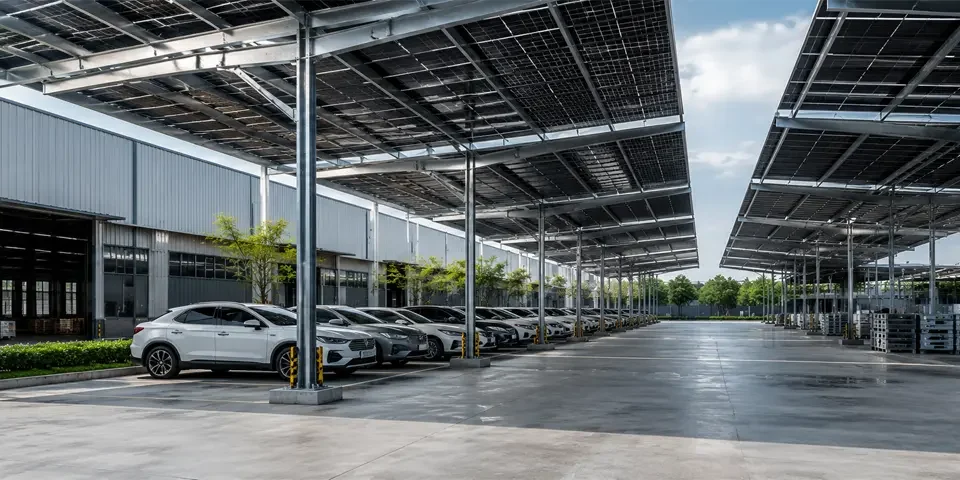
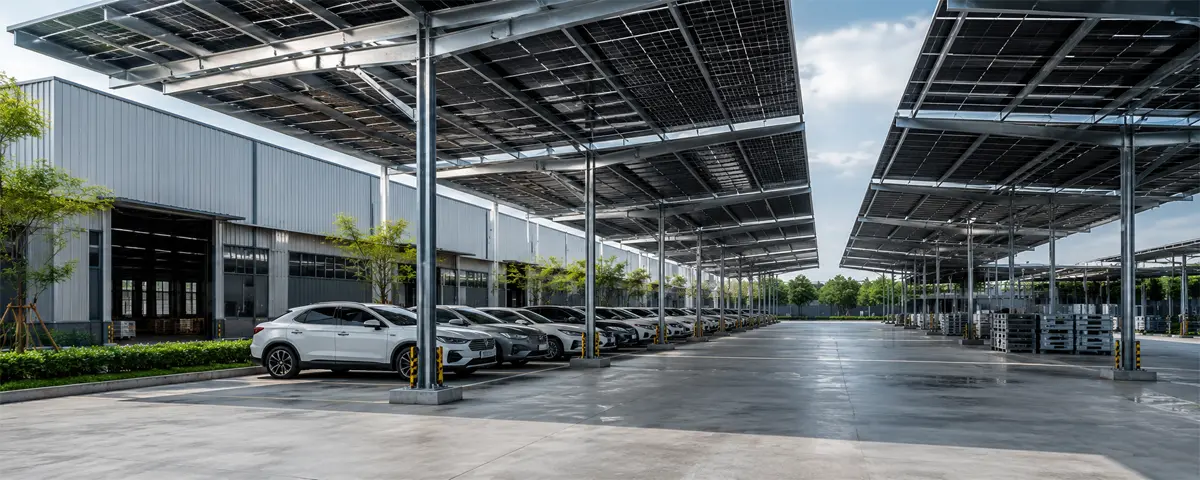
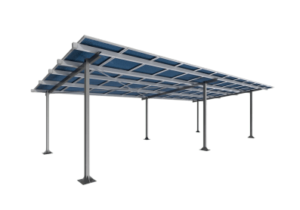
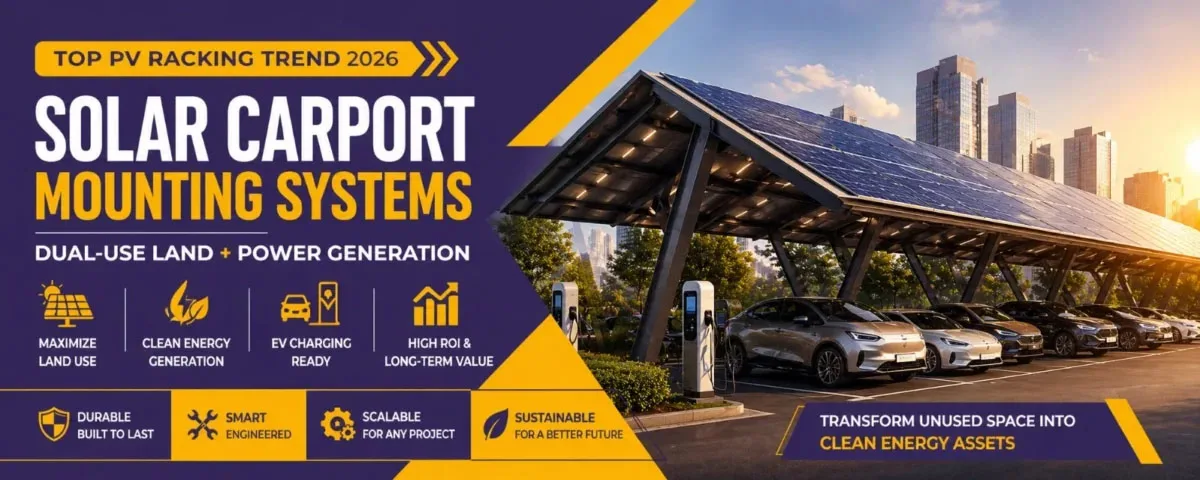
A solar carport mounting system is a freestanding structure that supports photovoltaic panels over parking spaces, driveways, or open land areas. Unlike rooftop solar, which depends on the condition and orientation of existing buildings, solar carport structures are purpose-built for energy generation from the ground up.
What makes solar carport systems particularly compelling in 2026 is the concept of dual-use solar infrastructure — a single piece of land simultaneously serving two productive functions. A parking lot doesn't just shelter vehicles anymore; it generates clean electricity, often enough to power the very facility it sits alongside.
For businesses facing rising energy costs and increasing pressure to hit sustainability targets, that dual-use proposition is hard to ignore.
The Market Is Moving — Fast
Global demand for solar mounting systems has been accelerating, but the carport segment is growing at a noticeably faster clip than traditional ground-mount or rooftop alternatives. Several forces are converging at once:
Commercial Real Estate Pressure
Property owners are extracting more value from underutilized surfaces. A parking lot is now a viable energy asset.
EV Adoption Feedback Loop
Rising electric vehicle ownership creates demand for charging infrastructure — solar carports deliver a clean, integrated solution.
.
Regulatory Tailwinds
European mandates and updated US federal ITC provisions are making carport PV economics increasingly favorable for developers.
The Real Business Case: Beyond the Green Halo
Let's be honest — sustainability credentials matter, but decisions still come down to the numbers. The good news is that solar carport mounting systems make a compelling financial case on their own terms.
Lower installation complexity compared to rooftop solar means faster permitting and construction timelines. There's no need to evaluate roof load capacity or structural reinforcement. The structure goes where the land is.
Scalability is another key advantage. A developer can start with a single carport bay and expand modularly as energy demand grows. This flexibility makes solar carport structures accessible to mid-market businesses, not just large enterprises.
Revenue Stacking Opportunities
- Reduced grid electricity costs through direct on-site generation
- EV charging revenue streams integrated within the same structure
- Solar Renewable Energy Credits (SRECs) and equivalent incentive programs
- Enhanced property valuations and improved tenant appeal for CRE operators
For commercial real estate operators and industrial developers, the carport model is evolving from a green add-on into a core part of the asset strategy.
A New Generation of PV Racking Solutions
The solar carport structures being deployed in 2026 are a far cry from the utilitarian steel canopies of a decade ago. Today's systems reflect genuine engineering sophistication.
Bifacial panel compatibility allows modern carport racking to capture reflected light from the ground surface beneath the structure, improving energy yield without increasing footprint. Integrated drainage systems manage rainwater runoff efficiently, while smart monitoring platforms provide real-time performance data directly to building management systems.
Aesthetically, there's been a quiet revolution too. Architects and developers are specifying solar carport designs that complement the surrounding built environment — clean lines, powder-coated finishes, and canopy profiles that look intentional rather than industrial.
From a structural standpoint, leading manufacturers of solar mounting systems have invested heavily in wind and snow load engineering, making today's carport solutions viable across far more climate zones and geographies than earlier generations.
Challenges Worth Acknowledging
No emerging technology arrives without friction. Solar carport mounting systems face a few legitimate headwinds that developers should factor into planning.
Upfront capital requirements remain higher per watt than rooftop installations, primarily because the structure itself must be financed. Power Purchase Agreements (PPAs) and solar lease structures are increasingly used to bridge this gap.
Grid interconnection timelines in many markets continue to lag behind installation pace. A well-engineered carport system waiting idle for utility approval is a frustration familiar to many developers.
Site suitability isn't universal. High-shade environments, irregular lot configurations, or geotechnical challenges can complicate the economics significantly. Thorough site assessment remains non-negotiable.
None of these challenges are dealbreakers — but they reinforce the importance of working with experienced EPC contractors and solar mounting systems specialists from the earliest planning stages.
Dual-Use Solar Infrastructure Is Here to Stay
"The parking lot has long been one of the most undervalued surfaces in commercial real estate. Solar carport mounting systems are changing that equation — turning acres of asphalt into productive, revenue-generating energy infrastructure without displacing a single parking space."
Looking beyond 2026, the trajectory for solar carport mounting systems is unambiguously positive. As land costs rise in urban and suburban markets, the premium on dual-use solar infrastructure will only increase.
The convergence of falling bifacial panel costs, smarter racking engineering, EV charging integration, and supportive policy environments is creating a powerful adoption cycle. Businesses that move early on carport solar are positioning themselves for genuine competitive advantage — in tenant attraction, ESG reporting, and long-term operating cost control.
For solar developers and EPC firms, the carport segment represents one of the most dynamic areas in the entire PV racking solutions market. The companies investing in carport-specific expertise, supply chain relationships, and project financing structures today will be well placed to lead this market through the decade.