

Solar Mounting Systems for UAE, Saudi Arabia & Oman: Desert Heat, Wind Load & Corrosion Resistance Guide
14/05/2026
Ground Mount Solar Structure Design: Complete Technical Guide for 1 MW to 100 MW Projects India 2026
18/05/2026
Agrivoltaic Solar Mounting Structures India 2026: Elevated Ground Mount Design for PM-KUSUM 2.0 Projects
becoming something far more interesting: a story of agriculture and energy finally working together, not against each other. As the government accelerates PM-KUSUM 2.0 rollouts across states, agrivoltaic solar mounting structures are emerging as the structural backbone of a new kind of farm — one that grows both crops and kilowatts on the same patch of land.
For solar developers, EPC contractors, and agricultural landowners, the opportunity is real and the window is now. But getting the structural design right is everything.
What Is Agrivoltaic Solar — And Why Is India Taking It Seriously?
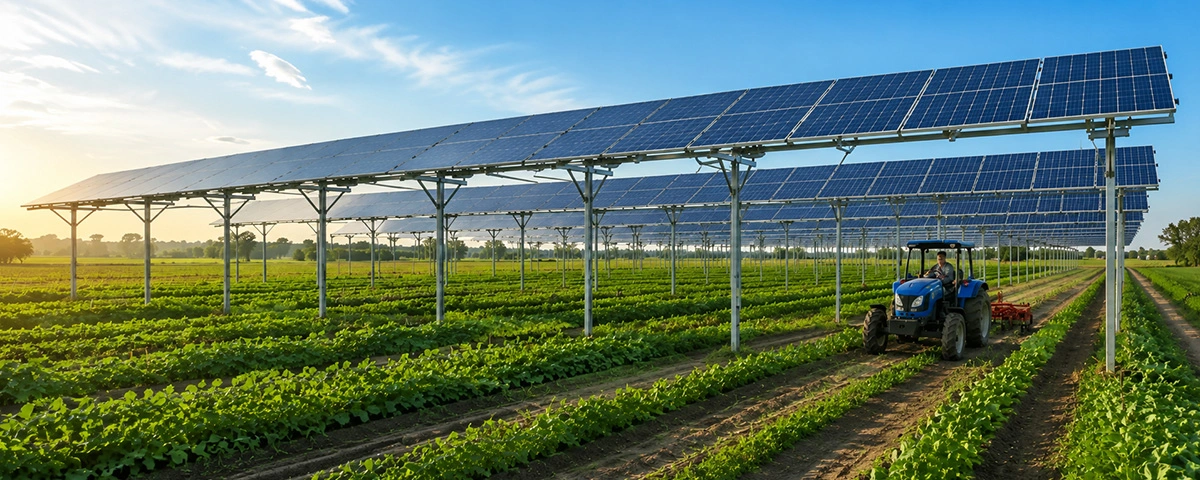
Agrivoltaics (also called agri-PV or solar farming) is the practice of co-locating solar panels and agricultural activities on the same land. Rather than displacing farmland, solar panels are elevated high enough to allow crops, horticulture, or livestock to continue beneath them.
India has over 140 million hectares of agricultural land. Devoting even a small fraction of that to conventional solar would displace farmers and trigger political resistance. Agrivoltaics sidesteps this entirely. In fact, studies have shown that certain crops — vegetables, pulses, and shade-tolerant plants — can actually thrive under elevated solar panels due to reduced heat stress and moisture retention.
By 2026, this isn't just an academic concept anymore. It's a procurement reality under PM-KUSUM 2.0, and state nodal agencies across Rajasthan, Maharashtra, Madhya Pradesh, and Uttar Pradesh are actively evaluating agrivoltaic PV racking solutions as viable project configurations.
PM-KUSUM 2.0 and the Structural Mandate
The Pradhan Mantri Kisan Urja Suraksha evam Utthaan Mahabhiyan (PM-KUSUM) scheme was designed to solarize agriculture — powering irrigation pumps and generating decentralized renewable energy. PM-KUSUM 2.0 takes this further by incentivizing farmers to become energy producers, with feedin tariffs and grid connectivity support.
What makes this relevant to mounting structure design? Two things:
- Land use restrictions — Beneficiary farmers cannot abandon cultivation. Any solar installation on agricultural land must demonstrably allow farming to continue.
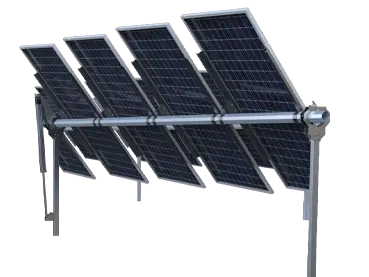
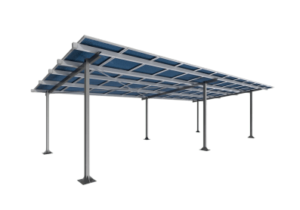
- Height requirements — To ensure machinery access and crop growth, elevated ground mount designs with a minimum clearance of 2.5 to 4 metres above ground are increasingly specified in state-level tenders.
This means conventional low-clearance ground mount systems — built for open land with no agricultural constraint — simply don't qualify. Developers need purpose-built agrivoltaic solar mounting systems engineered for height, load-bearing capacity, and long-term agricultural compatibility.
Engineering the Elevated Ground Mount: What Sets Agrivoltaic Structures Apart
Designing for agrivoltaics isn't just about adding taller legs to a standard ground mount. The structural calculus changes significantly.
1. Increased Column Height and Wind Load
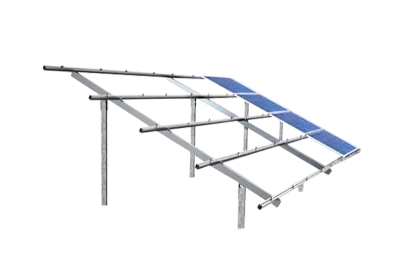
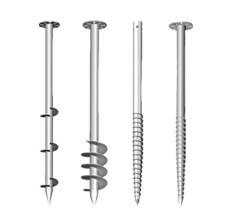
When you elevate panels to 3–4 metres, the wind moment arm increases dramatically. Structures must be designed with higher-grade galvanised steel or hot-dip galvanised (HDG) sections, with deeper pile foundations or driven piles suited to the local soil profile — whether black cotton soil in Vidarbha or alluvial soil in the Indo-Gangetic plains.
2. Wider Row Spacing for Equipment Access
Agrivoltaic configurations under PM-KUSUM 2.0 must allow tractors and irrigation equipment to pass through rows. This pushes GCR (Ground Coverage Ratio) lower — typically 25–40% — compared to 45–55% for conventional ground mounts. Structural layout must account for this without compromising system yield.
3. Tilt Optimization for Dual Use
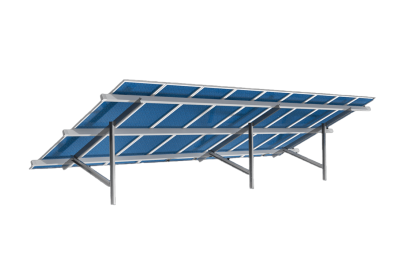
Panel tilt angles in agrivoltaic systems often deviate from purely energy-optimised angles. Steeper tilts (22–28°) can improve light diffusion beneath the array, reduce soil moisture loss, and allow more uniform shading — a benefit for certain crops. Your PV racking solution must offer flexibility in tilt adjustment without compromising structural integrity.
4. Corrosion Resistance
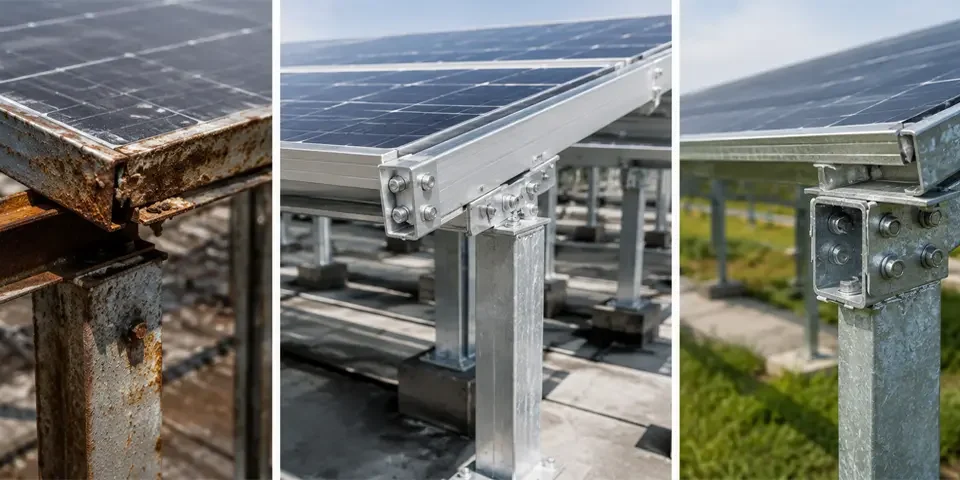
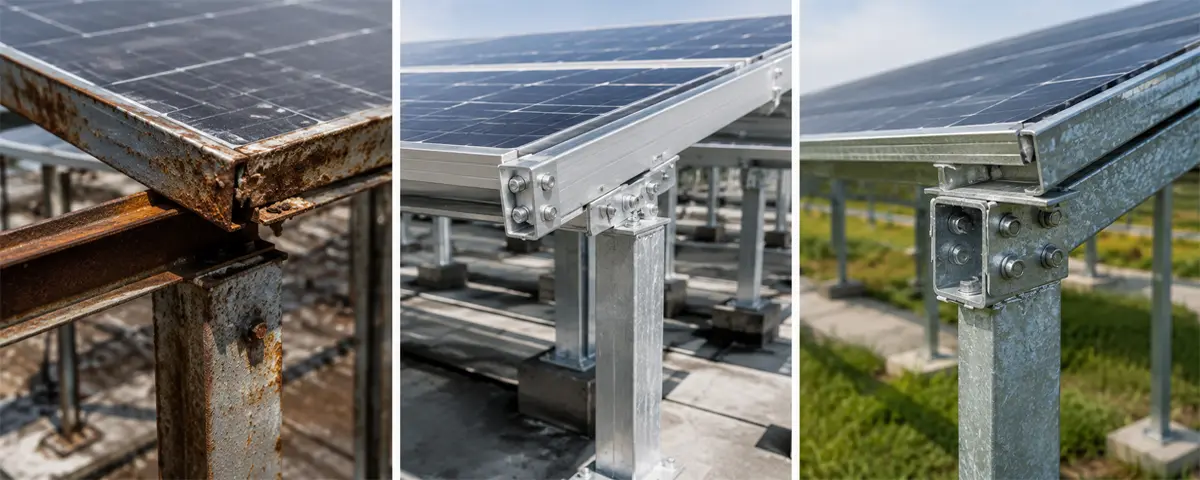
Agricultural environments are harsh — fertilisers, pesticides, and irrigation water accelerate corrosion. Leading agrivoltaic solar mounting structure manufacturers now specify minimum 85-micron HDG coating or stainless steel fasteners for all below-ground and splash-zone components.
Market Trends: Agrivoltaic Solar Mounting Systems India 2026
The structural mounting segment in India's agrivoltaic space is growing fast — and consolidating faster. Here's what's shaping the market this year:
Rising State-Level Demand Rajasthan's RREC, Maharashtra's MSEDCL, and MP's MPUVNL have all issued tenders with explicit agrivoltaic clauses in 2024–2025. By mid-2026, industry trackers estimate over 1.2 GW of agrivoltaic capacity is either under development or in pre-bid stages across these states.
Emergence of Integrated Mounting-EPC Players Developers are increasingly sourcing elevated ground mount structures from vendors who also offer civil design services and soil testing — reducing coordination gaps that have historically caused project delays.
BIS and MNRE Structural Compliance The Ministry of New and Renewable Energy (MNRE) has begun referencing IS 800 and IS 875 standards in PM-KUSUM project documentation, pushing mounting suppliers to provide certified structural design reports — not just product brochures.
Cost Pressures and Value Engineering Despite higher structural costs (elevated agrivoltaic structures can cost 15–25% more than standard ground mounts), developers are finding savings in land lease negotiations, as farmers accept lower rates when cultivation rights are retained.
Choosing the Right PV Racking Solution for PM-KUSUM 2.0
Not every mounting vendor is equipped to serve agrivoltaic projects. When evaluating PV racking solutions for PM-KUSUM 2.0 bids, developers and procurement teams should ask:
- Does the supplier have structural drawings stamped by a licensed civil engineer? State nodal agencies are increasingly requiring this for bid qualification.
- Can the system accommodate inter-row widths of 6–9 metres? Many standard product lines top out at 5 metres and require custom engineering beyond that.
- What is the pile specification for your project's soil type? A vendor offering only one pile type — regardless of site conditions — is a red flag.
- Is there a track record of agrivoltaic deployments in India? Reference sites matter; ask for commission dates and farmer feedback.
- What is the warranty and after-sales support structure? A 25-year system needs more than a 1-year product warranty.
The Road Ahead: Agrivoltaics as India's Solar Frontier
By 2030, India's agrivoltaic installed capacity could cross 10 GW if policy momentum holds — and most forecasts suggest it will. The convergence of farmer income support, India's 500 GW renewable target, and water conservation imperatives creates a near-perfect policy environment.
For the structural mounting industry, this means an expanding, technically demanding, and professionally rewarding market. The developers and suppliers who invest in agrivoltaic solar mounting systems now — building design capability, supply chains, and field experience — will be positioned to dominate a segment that's only going to grow.
The farm and the power plant are no longer competing for the same land. In 2026, they're sharing it — and the right elevated ground mount structure is what makes that possible.
Conclusion
Agrivoltaic Solar Mounting Structures India 2026 represent far more than a structural product category — they represent a fundamental shift in how India thinks about energy, agriculture, and land. As PM-KUSUM 2.0 accelerates deployment across states, the demand for purpose-built elevated ground mount designs with verified structural performance will only intensify.
For solar businesses, EPCs, and developers evaluating their next project, the message is clear: agrivoltaic isn't a niche anymore. It's the direction. And getting your PV racking solution right — structurally, agronomically, and commercially — is the difference between a winning bid and a missed opportunity.