

SECI, PSPCL & State DISCOM Solar Tenders May 2026: Upcoming Projects & Mounting ProcurOuement tlook
26/05/2026
Rust, Corrosion & Rain: How to Choose Monsoon-Resistant Solar Structures
04/07/2026
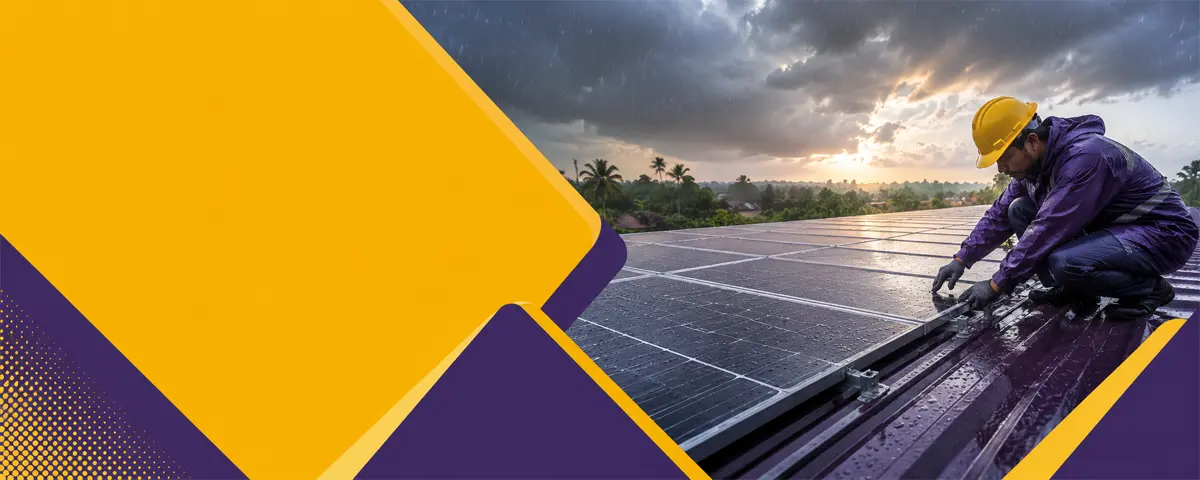
Monsoon-Proofing Your Solar Installation: Why Structure & Waterproofing Can't Be an Afterthought
Every year, monsoon season becomes the real stress test for solar power plants. Panels that performed flawlessly all summer suddenly face gale-force winds, pooling water, and hours of relentless rain. And more often than not, it's not the solar panel that fails first — it's the structure underneath it.
For businesses, developers, and EPC professionals, monsoon-proofing isn't a seasonal checklist item. It's a design decision that starts the moment you choose your solar mounting systems. Get the structure and waterproofing right, and your installation sails through the rains year after year. Get it wrong, and you're looking at corroded frames, water ingress, loose panels, and expensive downtime right when energy demand — and grid dependency — is at its peak.
This guide breaks down what monsoon-proofing actually means in practice, why it matters more than ever in 2026, and how a smart PV racking solution can be the difference between a resilient asset and a recurring liability.
Why Monsoons Are Brutal on Solar Installations
Solar panels are built to handle sun, heat, and daily wear. What they're not naturally built to handle is sustained moisture combined with high wind loads — and that's exactly what monsoons deliver.
A few common failure points show up every rainy season:
- Water pooling and seepage around mounting bolts and roof penetrations
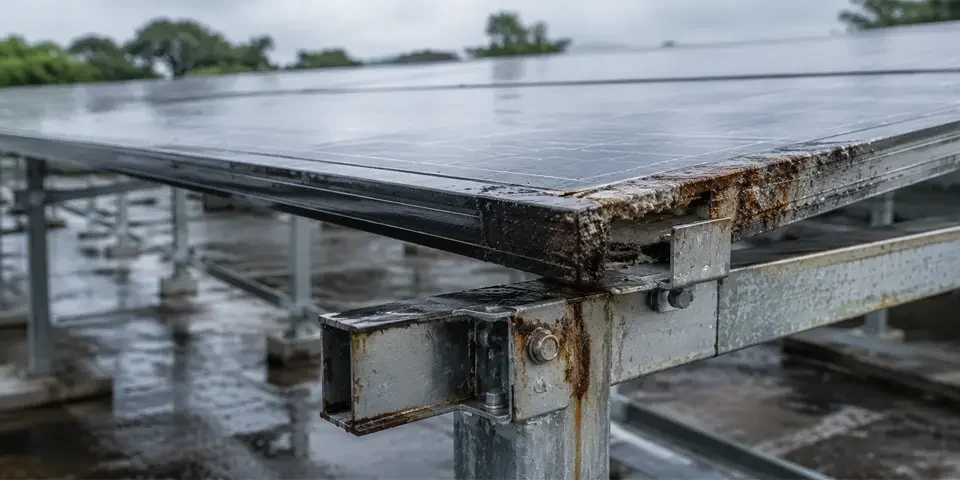
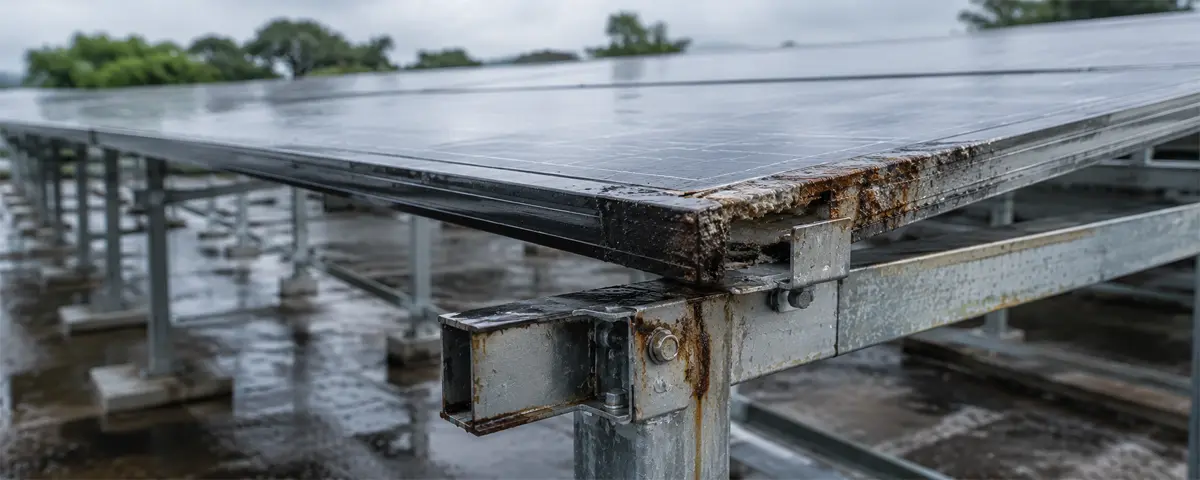
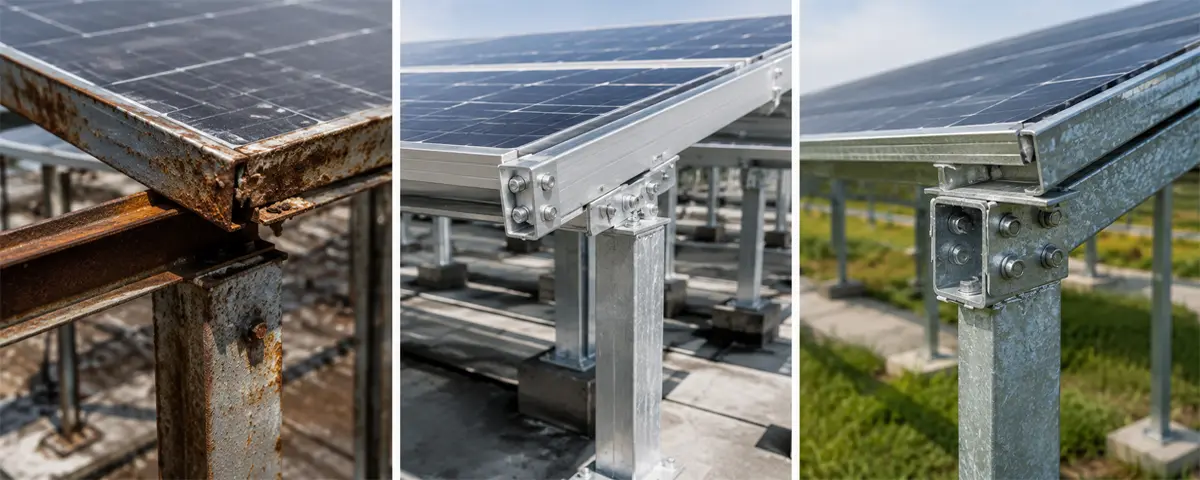
- Corrosion in poor-quality rails, clamps, and fasteners exposed to humidity
- Loosened structures from repeated wind gusts and vibration
- Electrical faults caused by moisture entering junction boxes or cable entry points
- Soil erosion around ground-mounted piles, especially in poorly drained sites
None of these issues are really about the solar module itself. They're structural and waterproofing failures — which means they're preventable with the right planning at the installation stage.
The Foundation of Monsoon-Ready Solar: Structure & Waterproofing Checklist
Before a single panel goes up, the mounting structure and waterproofing plan should already be finalized. Here's a practical structure & waterproofing checklist that solar developers and installers can use as a baseline for any rooftop or ground-mounted project.
1. Choose Corrosion-Resistant Materials
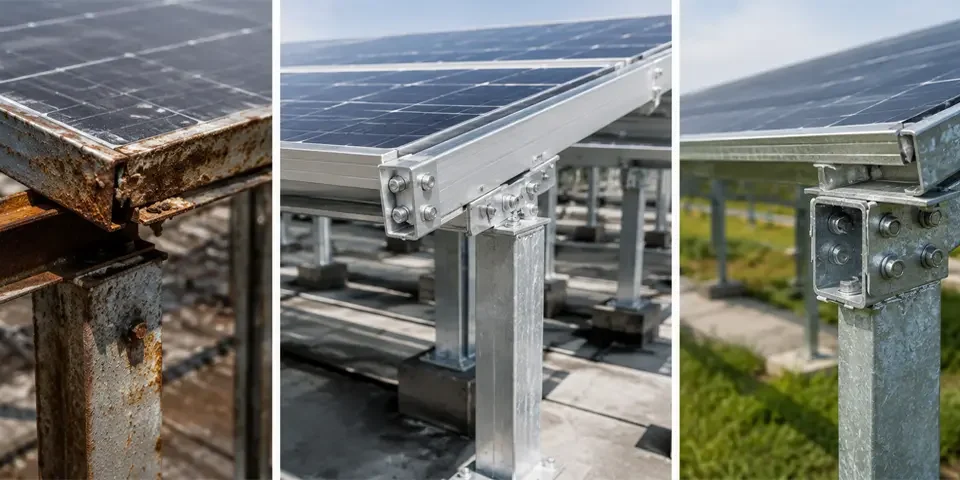
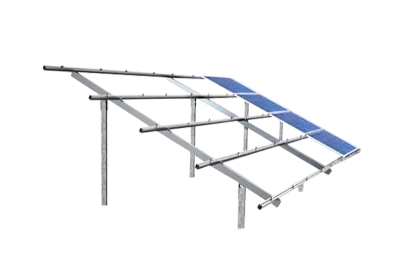
Hot-dip galvanized steel, anodized aluminum, and stainless-steel fasteners aren't optional upgrades anymore — they're the standard for any installation expected to survive multiple monsoon cycles. Cheaper mild-steel components may hold up for a season or two, but repeated exposure to rain and humidity accelerates rust, weakening structural integrity exactly where it matters most.
2. Seal Every Roof Penetration
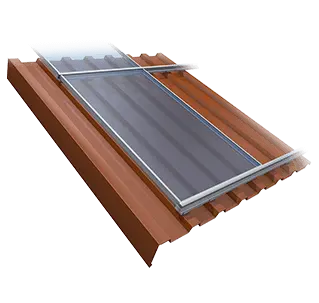
Rooftop installations almost always require some level of penetration for anchoring. Each of these points needs proper flashing, EPDM washers, or waterproof sealant compatible with the roofing material — tile, metal sheet, or concrete. A single unsealed bolt hole is often enough to cause a slow leak that goes unnoticed until ceiling damage appears months later.
3. Plan for Water Drainage, Not Just Water Resistance
A waterproof structure that traps water is still a problem. Mounting designs should allow water to flow off panels and away from the roof or ground surface rather than pooling around the base. This is particularly important for flat-roof installations, where slight tilt angles and drainage channels make a measurable difference.
4. Verify Wind Load and Structural Ratings
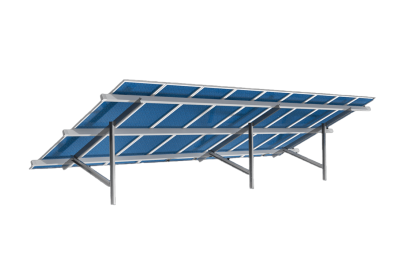
Monsoon winds can exceed the load assumptions used in cheaper, generic racking. Any PV racking solution deployed in a monsoon-prone region should be rated for local wind speed standards, with engineering calculations for uplift and lateral forces — not just vertical load from panel weight.
5. Protect Cable Entries and Junction Boxes
IP65 or higher-rated junction boxes, properly routed cable trays, and drip loops in wiring runs prevent water from tracking along cables into electrical enclosures. This is a small detail that causes a disproportionate number of monsoon-season service calls.
6. Inspect Ground-Mount Foundations for Erosion Risk
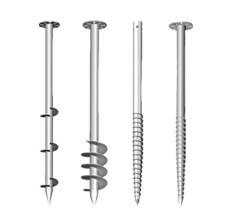
For ground-mounted systems, soil composition and drainage patterns around piles or concrete footings need to be assessed before installation. Loose or sandy soil, common in many regions, requires deeper foundations or helical piles rather than standard driven posts.
7. Schedule Pre-Monsoon Maintenance
Even a well-designed system benefits from an annual inspection before the rains hit — checking bolt torque, sealant condition, drainage paths, and rust spots. It's a low-cost step that prevents high-cost repairs later.
Why Solar Mounting Systems Deserve More Attention
It's easy to think of mounting hardware as a commodity — a functional necessity rather than a differentiator. But in monsoon-heavy regions, the mounting structure is arguably as important as the panel technology itself.
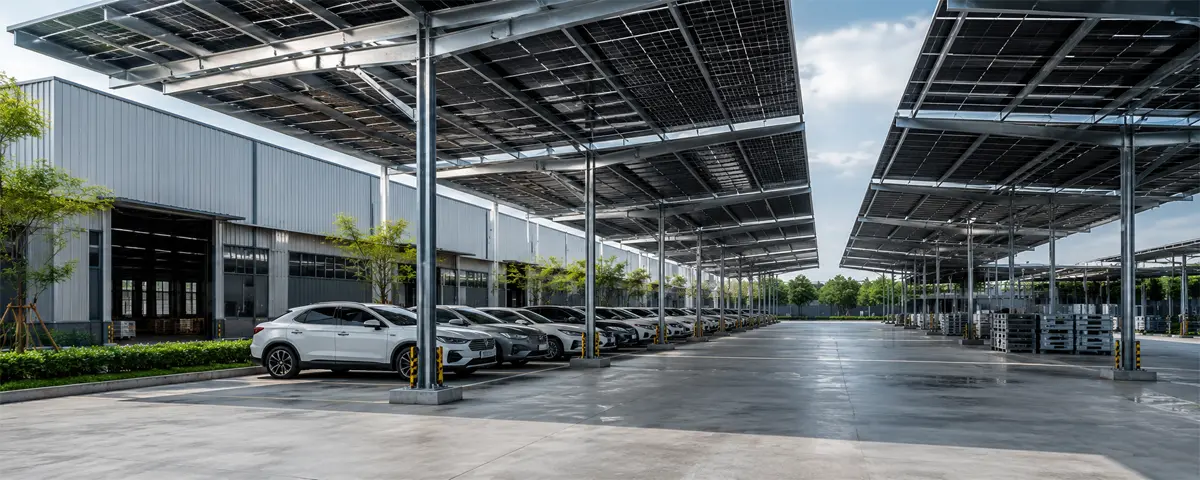
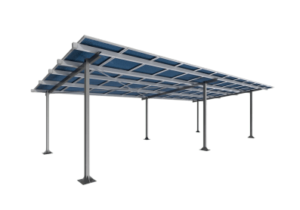
A well-engineered mounting system does three things simultaneously: it holds panels securely under dynamic wind loads, resists long-term corrosion in humid, wet conditions, and integrates cleanly with waterproofing measures at every anchor point. When any one of these fails, the entire installation's lifespan and safety are compromised, regardless of how efficient the panels are.
This is why serious developers now evaluate mounting systems on the same criteria they use for inverters or panels — material certifications, load testing data, and warranty terms — rather than choosing purely on upfront cost.
Market Trends: The Push Toward Smarter, Sturdier Mounting Solutions
The global market for solar mounting systems has been on a steady upward trajectory, with most industry estimates placing the sector's value in the tens of billions of dollars and projecting continued growth through the early 2030s. That growth isn't just about volume — it reflects a real shift in what buyers are prioritizing.
A few trends stand out heading into the rest of this decade:
- Corrosion-resistant materials are becoming standard, not premium add-ons, as developers factor in total lifecycle cost rather than just installation price.
- Modular and pre-assembled racking is gaining ground because it reduces on-site installation time and the number of exposed joints where water can enter.
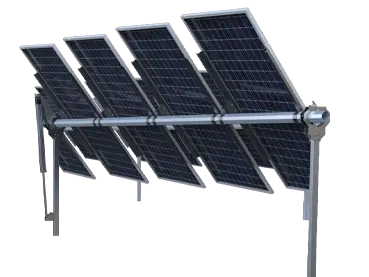
- Tracking systems continue to grow faster than fixed-tilt structures in utility-scale projects, which raises the engineering bar for structural stability under variable loads.
- Ballasted and hybrid rooftop systems are increasingly favored in commercial and industrial settings where roof penetration needs to be minimized — a direct win for waterproofing.
- Bifacial panel compatibility is pushing mounting system designers to rethink structural geometry, since these panels need unobstructed exposure on both sides without compromising drainage or wind resistance.
For regions with intense monsoon seasons — much of South and Southeast Asia in particular — these trends aren't abstract industry shifts. They're directly shaping what "reliable" solar infrastructure looks like on the ground.
Future Outlook: Building Solar That's Built to Last
As solar deployment accelerates across residential, commercial, and utility-scale segments, the industry's definition of quality is expanding. It's no longer just about panel efficiency or inverter performance — it's about whether the entire system, structure included, can perform reliably across every season, not just the easy ones.
Expect to see continued innovation in lightweight, recyclable mounting materials, smarter drainage-integrated designs, and mounting systems engineered specifically for extreme weather zones. As government incentives and net-zero targets keep pushing new installations forward, the mounting and waterproofing segment will likely see increased scrutiny from investors and insurers alike — because structural failures translate directly into financial risk.
For developers and EPC professionals, this is a good moment to reassess supplier relationships and specification standards. A slightly higher upfront investment in a certified, monsoon-rated PV racking solution almost always pays for itself by avoiding repair costs, downtime, and warranty disputes down the line.
Final Thoughts
Monsoon-proofing a solar installation isn't about one clever trick or a single waterproof coating — it's about treating the mounting structure and sealing details with the same seriousness given to panels and inverters. A rigorous structure & waterproofing checklist, paired with the right solar mounting systems, is what separates an installation that survives a decade of monsoons from one that needs constant patchwork repairs.
For solar businesses and developers operating in monsoon-prone markets, this isn't just good engineering — it's good business. Fewer service calls, longer asset life, and stronger client trust all start with getting the structure right, long before the first rain cloud shows up.