

Saudi Arabia NREP Solar Projects 2026: Mounting Structure Specs, Local Content Rules & Procurement Guide
21/05/2026
Solar Mounting Structure Load Calculator: MW-wise Weight, Pile Depth & Galvanizing Specs for India & GCC
25/05/2026
Introduction: Your Parking Lot Is Sitting on Untapped Energy
Imagine your commercial parking lot doing two jobs at once — sheltering vehicles and generating megawatts of clean electricity. In 2026, this is no longer a futuristic concept. Across India, businesses, real estate developers, and industrial facilities are rapidly converting idle parking spaces into high-yield solar power plants using solar carport mounting systems.
With India's solar capacity surpassing 100 GW and the government's ambitious push toward 500 GW of renewable energy by 2030, solar carports have emerged as one of the smartest, most space-efficient PV racking solutions available. They don't consume extra land. They don't displace green cover. They simply turn underutilized infrastructure into a revenue-generating energy asset.
If you're a business owner, real estate developer, or solar industry professional wondering whether solar carport mounting systems are worth the investment in 2026 — this guide is for you.
What Are Solar Carport Mounting Systems?
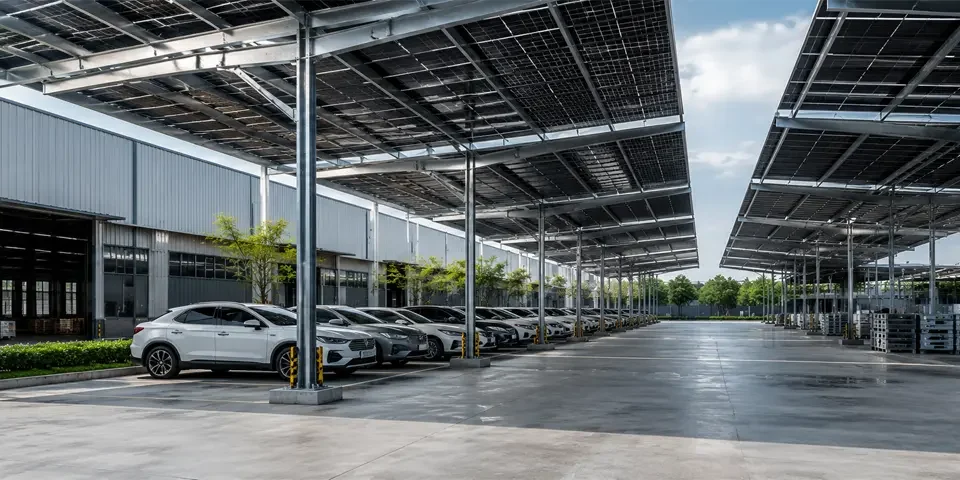
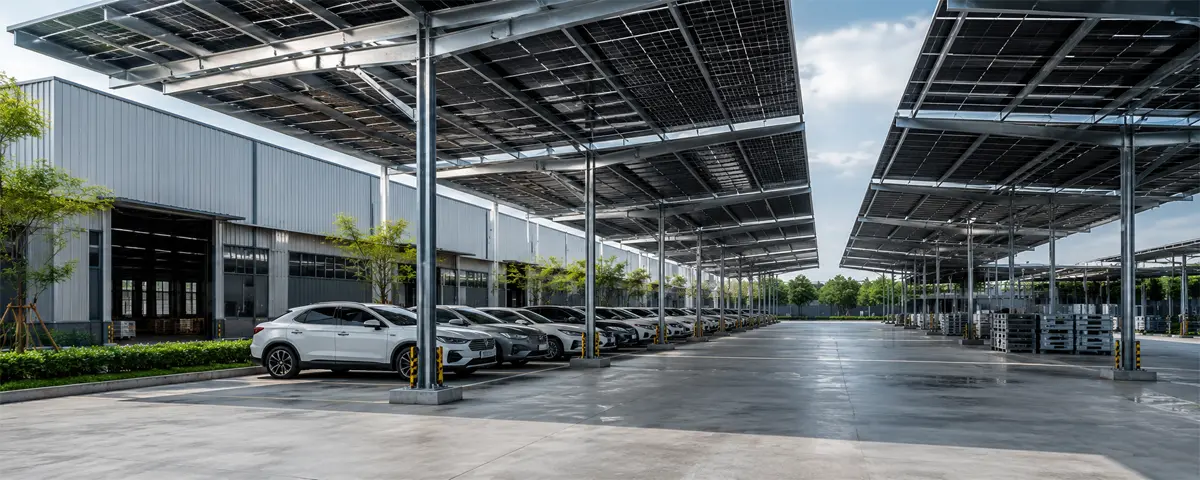
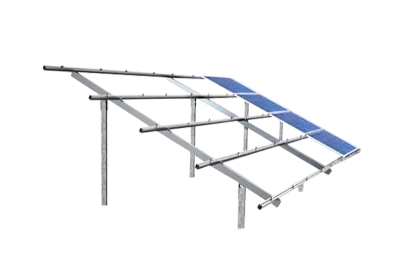
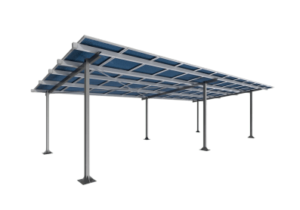
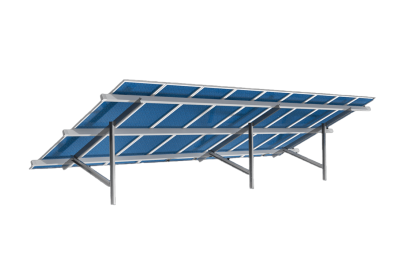
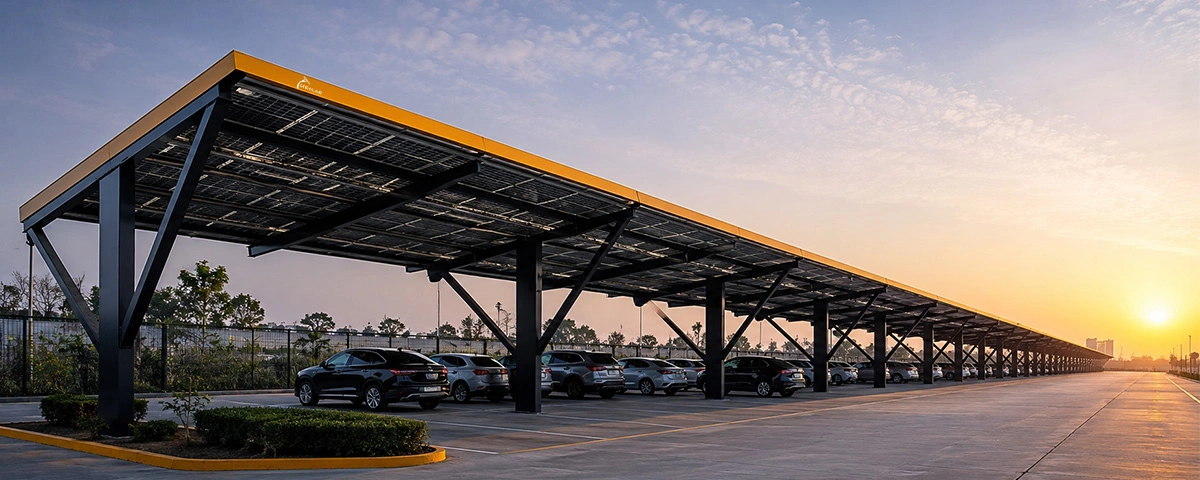
A solar carport mounting system is a steel or aluminum structure — designed like a canopy — installed over parking spaces. Photovoltaic (PV) panels are mounted on top, generating solar power while providing shade to parked vehicles below.
Unlike rooftop solar, carport systems are purpose-built for open ground-level or basement-entry parking areas. They come in a range of configurations:
- Single-post cantilever designs — ideal for tight parking bays
- T-structure (dual-post) systems — heavier loads, wider spans
- Pergola-style multi-bay structures — suited for large commercial parking lots
- EV-integrated carports — combining solar generation with electric vehicle charging infrastructure
The structural foundation, tilt angle, and panel capacity are all engineered based on wind load zones (India has specific IS 875 standards), site dimensions, and energy targets.
Why Solar Carports Are Booming in India in 2026
India's commercial real estate and industrial sectors are under growing pressure to meet sustainability targets, reduce electricity bills, and comply with renewable purchase obligations (RPOs). Solar carport mounting systems tick all three boxes — and then some.
Here's what's driving the surge:
1. Sky-High Commercial Power Tariffs Commercial electricity rates in states like Maharashtra, Tamil Nadu, and Karnataka now average ₹8–12 per unit. A well-designed solar carport system can slash that cost to ₹2–3 per unit, delivering ROI within 4–6 years.
2. Land Scarcity in Urban India In Tier-1 cities, available rooftop and ground-mount space is premium. Parking lots — especially in malls, hospitals, IT parks, and airports — offer thousands of square meters that were previously generating zero energy.
3. EV Revolution Demands On-Site Solar India's EV adoption is accelerating sharply in 2026. Solar carports with integrated EV chargers are becoming the default infrastructure choice for forward-thinking commercial developers. You generate the power and sell it to EV users on-site.
4. Government Incentives and Policy Tailwinds The PM Surya Ghar scheme, accelerated depreciation benefits (40% in Year 1), and state-level net metering policies make the financial case for solar carport installation even stronger for C&I (commercial and industrial) players.
Key Components of a High-Performance PV Racking Solution
Not all solar mounting systems are built the same. Here's what to look for when evaluating a PV racking solution for your carport project:
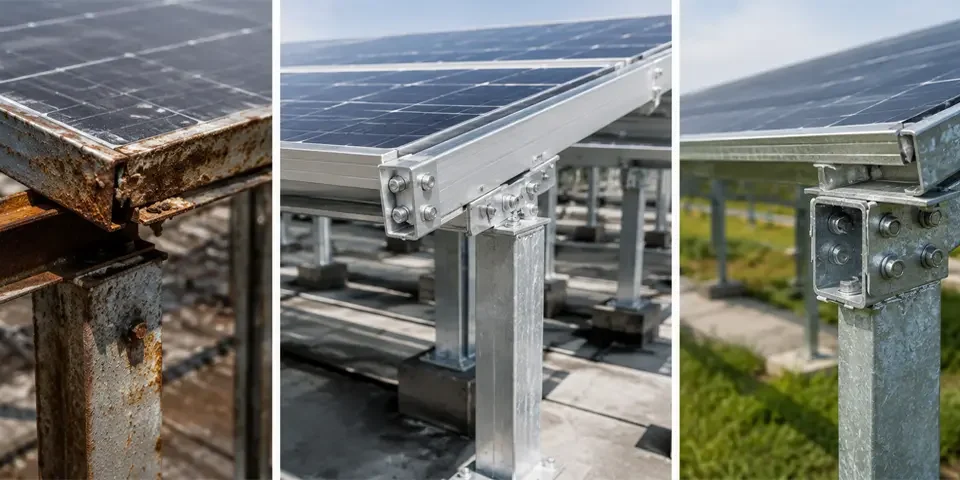
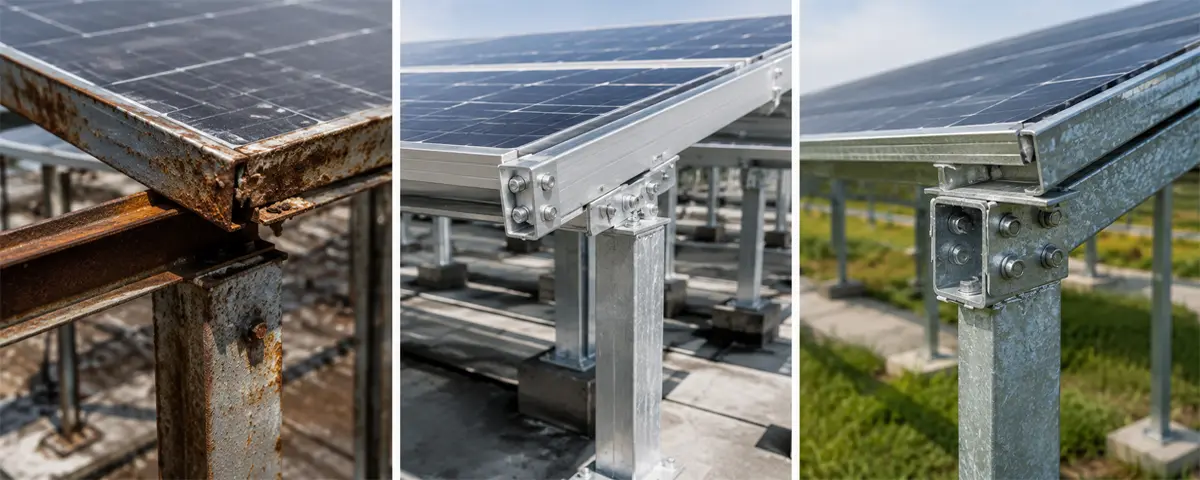
- Material: Hot-dip galvanized steel or anodized aluminum — both offer 25+ year structural life in Indian weather conditions
- Wind Load Rating: Must comply with IS 875 Part 3 norms for your specific state/region
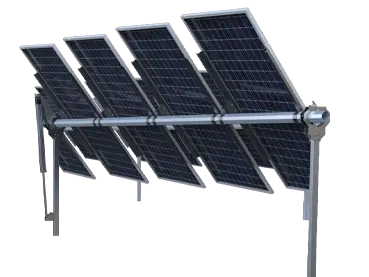
- Tilt Angle Flexibility: Adjustable tilt (10°–25°) allows optimization for maximum solar yield across different latitudes
- Panel Compatibility: Ensure the racking system supports mono-PERC, TOPCon, or bifacial modules (all high-efficiency formats dominant in 2026)
- Cable Management: Integrated conduit paths keep wiring safe, hidden, and maintenance-friendly
- Drainage Design: Proper slope and gutter integration prevent waterlogging on parking surfaces below
Always insist on a site-specific engineering report before procurement. A generic design might save upfront costs but could underperform — or worse, fail structurally — in high-wind coastal zones or seismic areas.
Solar Carport Capacity Planning: What Can Your Parking Lot Generate?
Let's put real numbers on this. A standard parking bay (2.5m × 5m = 12.5 sq m) can accommodate approximately 1 kWp of solar panel capacity. Here's a rough output matrix for Indian conditions:
| Parking Spaces | Installed Capacity | Annual Generation (Approx.) | Monthly Savings (₹) |
|---|---|---|---|
| 50 | ~50 kWp | ~70,000 units | ₹5–7 lakh |
| 200 | ~200 kWp | ~2.8 lakh units | ₹22–28 lakh |
| 500 | ~500 kWp | ~7 lakh units | ₹55–70 lakh |
These figures vary based on location, panel efficiency, and local tariff rates — but they make the case clearly: large parking lots are genuinely utility-scale energy assets in disguise.
Market Trends: Solar Carport Mounting Systems in India 2026
The Indian solar carport market is no longer a niche. Several macro-trends are reshaping it in 2026:
Institutional Buyers Are Leading the Charge Airports (AAI is piloting solar carports at 10+ locations), large format retail chains, IT campuses, and hospitals are commissioning projects in the 500 kWp–5 MWp range. These aren't pilot projects — they're full-scale infrastructure deployments.
Domestic Manufacturing Is Getting Competitive Thanks to the PLI scheme for solar components, Indian manufacturers of mounting structures are now globally competitive in quality and pricing. Domestic sourcing reduces project costs by 15–20% compared to 2022 levels.
Bifacial Panels + Carports = Maximum Yield Bifacial solar panels — which capture reflected light from below — are particularly effective on carport structures where ground albedo can be optimized. This pairing is becoming the industry standard for premium carport installations.
ESCO and Opex Models Lowering Entry Barriers Energy Service Companies (ESCOs) now offer solar carport systems on a zero-capex, power purchase agreement (PPA) basis. Businesses pay only for the electricity consumed — making adoption accessible even for mid-sized enterprises.
Installation Process: What to Expect
A typical solar carport project follows this phased timeline:
- Site Assessment & Feasibility Study (1–2 weeks) — Shadow analysis, structural survey, load bearing check
- System Design & Engineering (2–3 weeks) — PV layout, racking design, single-line diagrams
- Approvals & Net Metering Application (4–8 weeks) — DISCOM coordination, local authority NOC
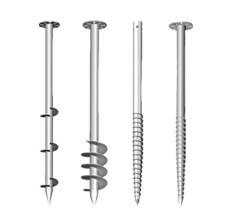
- Civil & Structural Work (2–4 weeks) — Foundation, column installation
- Panel & Electrical Installation (2–3 weeks) — Module mounting, wiring, inverter installation
- Commissioning & Monitoring Setup (1 week) — SCADA/IoT monitoring integration
Total timeline: 3–5 months from contract to commissioning for projects up to 500 kWp.
Choosing the Right Solar EPC Partner in India
The quality of your solar carport system depends heavily on your EPC (Engineering, Procurement & Construction) partner. Evaluate them on:
- Experience with ground-mount and carport structures specifically (not just rooftop)
- In-house structural engineering capability
- Post-commissioning O&M (Operations & Maintenance) support
- References from similar-scale projects
- Warranty terms on both structure (25 years typical) and panels (30 years for tier-1 brands)
Don't shortcut this step. The cheapest bid rarely delivers the best lifecycle value.
Future Outlook: Solar Carports as Standard Urban Infrastructure
By 2030, solar carport mounting systems are expected to become a building code requirement for new commercial constructions above a certain parking capacity in several Indian states — much like fire safety systems today.
The convergence of solar, EVs, and battery storage will transform parking lots into micro-grid hubs — generating, storing, and distributing clean energy on-site. Businesses that invest now are not just cutting energy bills; they're building infrastructure that will appreciate in strategic value over the next decade.
India's sun-belt geography, rapidly improving module efficiencies, and falling racking system costs mean the economics only get better from here.
Conclusion: Don't Let Your Parking Lot Sit Idle
In 2026, every parking lot in India is an opportunity — a chance to generate clean energy, cut operational costs, meet ESG goals, and future-proof your facility for the EV era. Solar carport mounting systems make that transformation possible without complex land acquisition or building modification.
Whether you manage a 50-bay office parking lot or a 2,000-space airport terminal, the technology, financing, and supply chain are all mature and ready. The question isn't whether to act — it's how soon.
Start with a feasibility study. Get site-specific numbers. And turn your parking lot into the power plant it was always meant to be.