

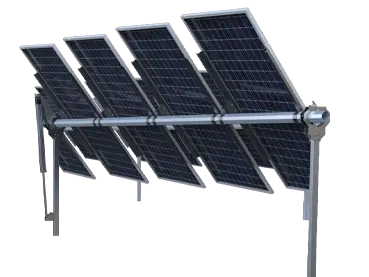
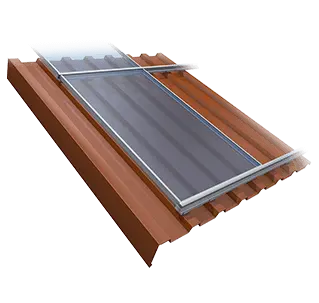

Roof vs Ground-Mounted Solar: Which One Actually Makes Sense for You?
21/04/2026
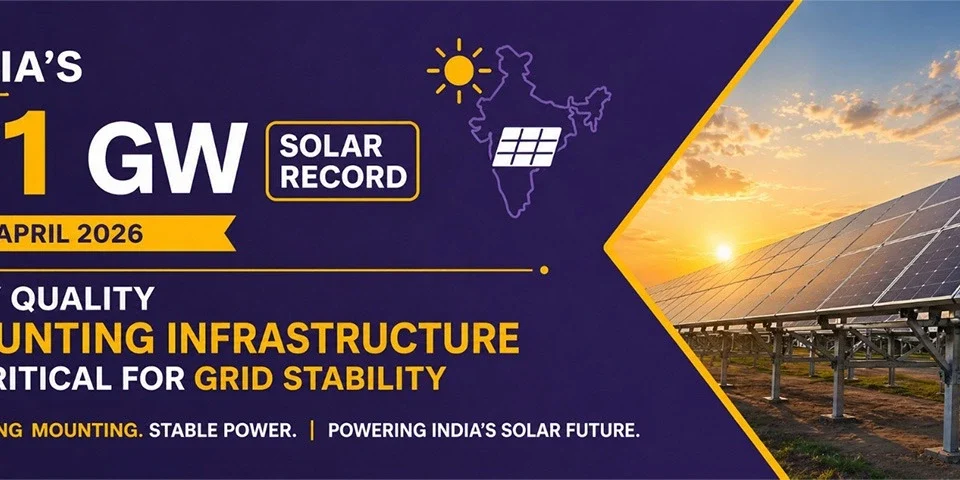
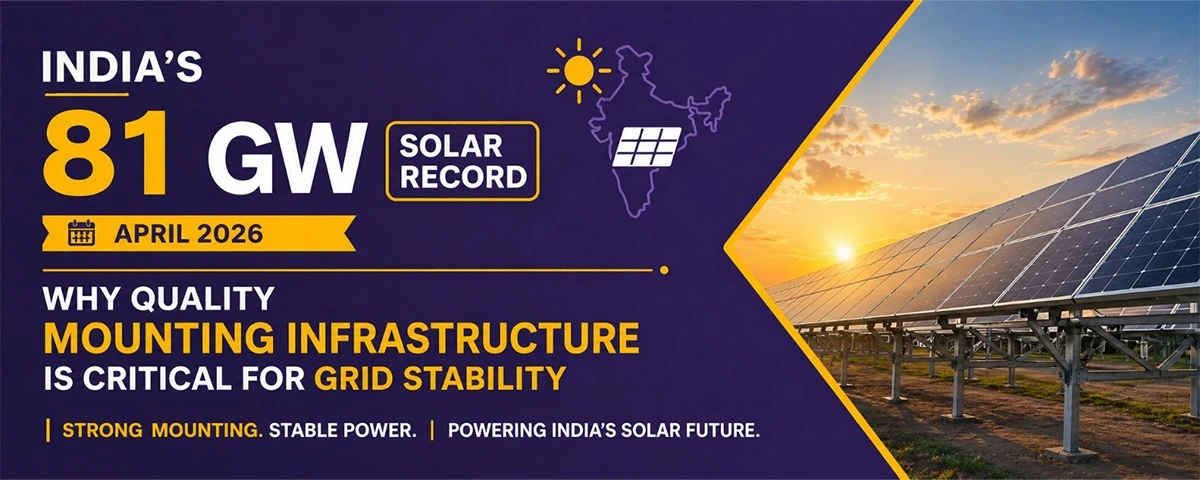
India’s 150 GW Solar Milestone Sparks Unprecedented Growth for Solar Mounting Companies in 2026
24/04/2026
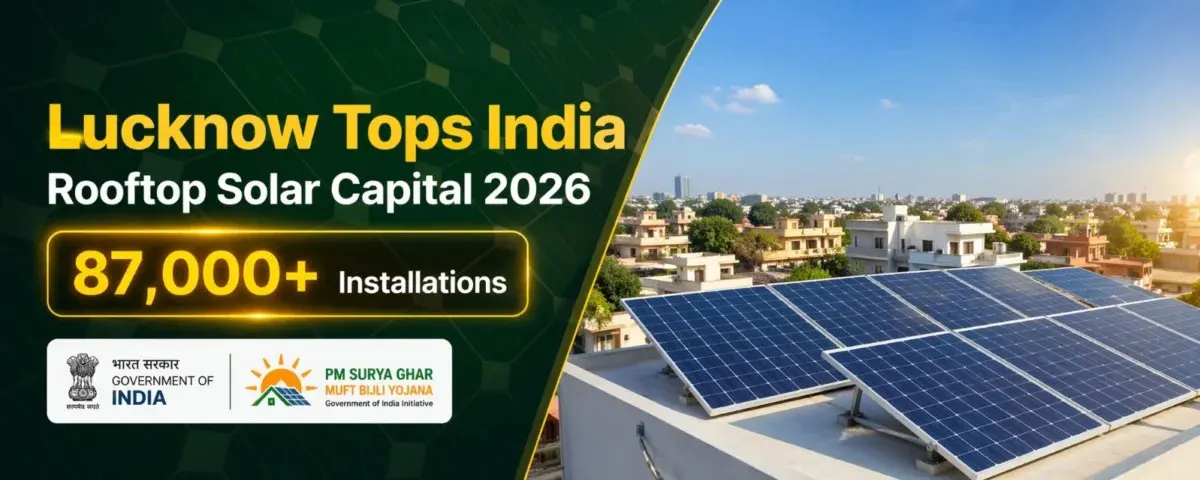
Lucknow Just Became India's Rooftop Solar Capital — And Most People Don't Know It YetWith 87,000+ installations under PM Surya Ghar Yojana, our city is now #1 in the entire country. Here's what that actually means for you.
There's a quiet revolution happening on the rooftops of Lucknow.
Not in some boardroom announcement. Not through a government ad on television. It's happening house by house, colony by colony — panels going up, electricity bills going down, and one city pulling ahead of every other district in India.
As of April 15, 2026, Lucknow has crossed 87,000 rooftop solar installations under the PM Surya Ghar Muft Bijli Yojana — officially overtaking Surat to become the single most solar-active district in the entire country. That figure was confirmed by Inderjeet Singh, Director of UPNEDA (Uttar Pradesh New and Renewable Energy Development Agency).
In April alone, 3,133 new solar systems were added across the city. That's roughly 100 rooftops switching to solar every single day.
We're not just watching this from the sidelines. As a rooftop solar company working right here in Lucknow, we've seen this shift on the ground — and we want to break down what's actually happening, and what it means if you're still thinking about making the switch.
So How Did Lucknow Get Here?
A few years ago, rooftop solar in Lucknow was mostly a conversation for engineers and environmentalists. Today, it's a decision being made at kitchen tables across the city. What changed?
Electricity bills, mainly. Urban households are spending significantly more on power than they were five years ago — and the reasons aren't going away. Induction cooktops have replaced gas stoves in many homes. Electric vehicles are parked in more driveways. Air conditioning runs longer every summer. Power consumption in cities like Lucknow has gone up, and so have monthly bills.
At the same time, the PM Surya Ghar Muft Bijli Yojana made solar financially accessible in a way it simply never was before. The result: Lucknow didn't just participate in India's solar push — it led it. Four key forces came together:
Rising Power Bills
EV charging, induction cooking, and longer AC use have pushed household electricity costs higher — making solar's payback period shorter than ever.
Government Subsidies
A 40% central subsidy plus low-interest collateral-free loans has brought rooftop solar within genuine financial reach for middle-class families.
Environmental Awareness
Solar is no longer just about saving money. For many Lucknow families, reducing their carbon footprint has become a genuine motivator.
Faster Approvals
UPNEDA and local DISCOMs have streamlined processes significantly. What used to take months now moves in weeks — removing the biggest pain point.
What the Official Numbers Actually Tell Us
By April 15, 3,133 rooftop solar plants had been installed in Lucknow alone. This achievement makes Lucknow the leading district in the country in adopting solar energy.— Inderjeet Singh, Director, UPNEDA
Nationally, the PM Surya Ghar scheme has reached 1.6 million households and added nearly 4.9 GW of residential rooftop solar capacity since its launch in February 2024. Uttar Pradesh is one of the top five states contributing to that growth, alongside Gujarat, Maharashtra, Kerala, and Rajasthan.
 Lucknow vs. India — Key Data Points
- 87,000+ rooftop solar plants installed in Lucknow as of April 15, 2026
- #1 in India Lucknow now ranks above Surat for rooftop solar installations
- 4.9 GW total residential rooftop solar added nationally under PMSGY
- 1.6 million households reached across India by July 2025
- 22–23% national conversion rate from application to installation — Lucknow outperforms
- Top 5 states UP, Gujarat, Maharashtra, Kerala, Rajasthan lead national capacity
Here's something worth sitting with: nationally, only about 22–23% of people who applied under PM Surya Ghar actually completed their installation. Lucknow's outperformance is because the ecosystem here is more developed — more vendors, better DISCOM coordination, and real word-of-mouth from neighbours who've already done it. When your next-door neighbour's electricity bill drops to almost nothing, you start paying attention.
What PM Surya Ghar Actually Gives You
Let's keep this practical. Here is the central government subsidy structure for residential rooftop solar under the scheme:
| System Size | Central Subsidy | Approx. Monthly Units | Best For |
|---|---|---|---|
| 1 kW | ₹30,000 | ~90–100 units | Small 1–2 BHK, low consumption |
| 2 kW ⭐ | ₹60,000 | ~180–200 units | Most Lucknow households |
| 3 kW | ₹78,000 | ~270–300 units | Larger homes, EVs, inverter AC |
| Above 3 kW | ₹78,000 (capped) | 300+ units | High-consumption households |
For systems up to 3 kW, collateral-free loans are available at around 7% interest. In many households, the monthly loan EMI works out to less than the electricity bill they're replacing. That's when solar stops being a good idea and starts being an obvious financial decision.
Anything your panels generate beyond your own use flows back into the DVVNL grid through net metering — and you receive credit against your bill. Many families in Lucknow have brought their effective electricity cost down to near zero.
FROM OUR TEAM
We started this company because we believed Lucknow's households deserved honest, no-confusion guidance through the solar process — not just a vendor who shows up, installs panels, and disappears.
Seeing 87,000 families in our city already generating their own power is something we take real pride in being part of. There's still a long way to go. Not everyone knows this is possible for their home. Not everyone has had someone sit down and explain the subsidy in plain language.
That's what we do.